
Occasionally I like those books too, but for the most part what entertains me is what provokes me to thought. Hence my latest batch of books. I don't know exactly why, but right now I am consumed with a need to understand poverty and figure out what to do about it. I guess it's because a lot of the people I'm currently serving in my church work are in or near poverty. And because I'm the daughter of two extremely hardworking people who didn't have two pennies to rub together when I was a kid. And also because the poverty rate in the first city I served in as a missionary was over 30%. When you see a mother and a son physically fight over a plate of food, it does something to you.
These first three books are the beginning of my personal study of poverty. They provided confirmation for a lot of what I'd already observed, but they also added some valuable new insights.

I picked this up totally by impulse off of a display our library had up in September. It's a fascinating look at the different causes of and attempted solutions for hunger and food insecurity in America. Winne's main conclusion is that it is the federal government's job to end hunger and that a massive influx of money directed at the problem is the key.
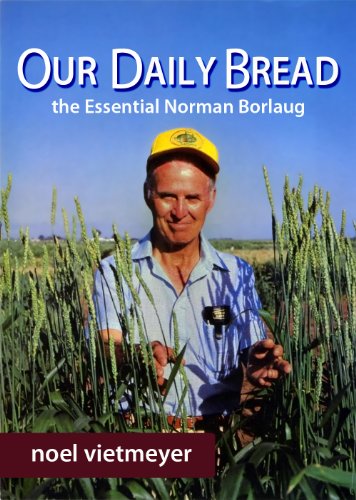
Our Daily Bread: The Essential Norman Borlaug, by Noel Vietmeyer
I got this one as a free download to my Kindle, courtesy of a heads-up from Sierra. I have to confess that I didn't even know who Norm Borlaug was. Seriously? How did I not know about this man whose pioneering work in cross-pollinating wheat more than quadrupled the yield capacity of a single acre, saving the lives of hundreds of millions who stood on starvation's door? He won the Nobel Peace Prize in 1970. Remarkable man. There are other works available about him, and the author of this one is occasionally too shmultzy, but the story speaks for itself. I also found Borlaug's personal journey from abject poverty to educated, middle-class prosperity compelling. He worked his butt off to get where he did, and certainly possessed incredible drive, but it wasn't without some public assistance. A pattern?
The Working Poor: Invisible in America, by David K. Shipler
If you've never spent much time around poverty, this book is a fantastic introduction to the myriad of problems confronting those whose daily lives are less certain than the weather. Every real person whose story Shipler tells reminds me sharply of someone I have known. Very stirring. But although he lays the problems out with grand precision, I don't feel like he gave as much emphasis on solutions as I was hoping for. I thought the chapter on Skill and Will made some really salient points, but it still fell short. The premise of this book is that it rejects both the "Republican Myth" (the poor are just lazy, stupid people taking advantage of the system) and also the "Democrat's Anti-Myth" (the poor are all just noble and virtuous souls who fall on hard times through absolutely no fault of their own). I found Shipler's claim on that front to be mostly lip service. He does acknowledge bad decisions made by the people he interviewed, but seems to mostly see those decisions as inevitable (i.e. people do drugs because there isn't another choice). And also, he never really addresses what to do about abuses against the system (which really do occur in some cases). Anyway, if you are interested in the subject, this is definitely worthy food for thought.
And now, because not even I can be boring enough to read nonfiction all of the time, two fiction selections:
Northanger Abbey, by Jane Austen
This is one of the fastest, lightest, perhaps most overtly humorous of Austen's novels. I've read all of her novels before, but this was a first time rereading this one. Worth it.
Mansfield Park, by Jane Austen
My least favorite Austen. I thought that when I first read them all, and twelve years hasn't improved my opinion of it. I find the heroine to be somewhat weak and the center of the story drags. But still, it's Austen. Worth one read, but only if you've already read the others and still need a fix.


